

State the purpose of the contact
Before calling or checking a portal, identify the unanswered question. A clear purpose helps the reviewer choose the right source and recognize whether the response actually answers it. “Check status” may be enough for a defined stage, but a disputed adjustment needs more context. Keep the relevant claim and patient references in the approved account system rather than copying them into a general operational note template.
Record the evidence another person needs
Use the practice’s approved method to preserve the response date, source and relevant reference. Describe the answer in plain language and retain the underlying response where available. Avoid a note that only says “called payer” or “portal checked.” Another team member should be able to understand what was learned and where to confirm it without repeating the entire conversation or searching personal email.

Move from the question to the next action
Separate what was said from what was decided
A payer representative’s explanation, a portal status and the practice’s authorized decision are different parts of the history. Make that distinction clear.
If a response requires clinical, coding or other review, name the question and reviewer rather than presenting the conversation as an approved correction. The actual remittance and applicable payer instructions remain important when a payment or adjustment issue is being interpreted.
Make the next step actionable
End with the action, owner and next review date, or a specific reason no further administrative action is required. When waiting on the practice, state what information or decision is needed.
If the item moves to another team, confirm the recipient and keep the transfer visible. A handoff is not complete merely because a message was sent to a shared mailbox with no accountable owner.
Use a short quality review
Sample notes for whether another authorized staff member can continue the work from the recorded evidence. Focus on missing context and unclear tasks rather than note length. Apply the practice’s privacy and access rules to the information recorded.
HHS minimum-necessary guidance is a relevant reference for appropriate information handling; the operational template should not become an unrestricted copy of patient records. The free tracker uses anonymous work IDs for process follow-up.
Illustrative workflow
A practical example.
Fictional workflow: an old note says “payer called, pending.” The next analyst cannot identify the question or next review. The team replaces this habit with a note structure covering purpose, source, answer and next action. A training sample might state that a specific practice detail is still needed, identify the approved response owner and set a review date, with all account references retained only in the authorized system.
Put it into practice
- Record the question and evidence source.
- Distinguish the response from an authorized decision.
- End with one action, owner and review date.
Inside the workbook
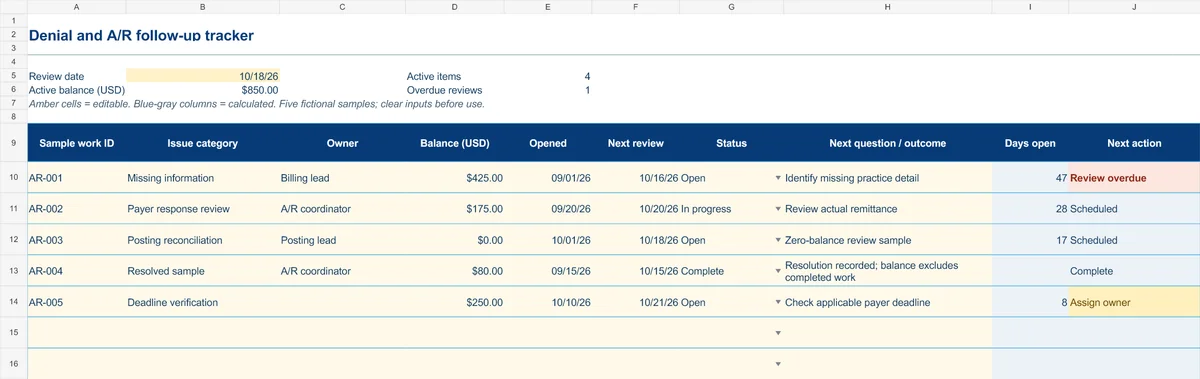
Start with the Instructions tab. Replace the five fictional samples, set your review date and keep the formula columns intact.
Free XLSX tool · No signup
Denial & A/R follow-up tracker
Plan anonymous follow-up work and make overdue reviews and missing owners visible.
- Fictional USD balances and active-balance summary
- Review dates chosen by your practice
- Calculated active items, age and next actions
Use anonymous process tasks. Keep PHI in approved systems. Includes instructions and fictional samples; no macros or live data connection.