

Preserve the original response
Keep the adjudication response alongside the submitted claim version and relevant dates in the approved billing system. A label such as “denied” is too broad to guide work. Read the affected service line, adjustment information and any accompanying explanation.
Record the source of a deadline instead of calculating it from a remembered rule. Different products and processes can have different routes, so an old successful appeal is a reference point rather than a universal instruction.
Identify the question before choosing the action
Separate a missing administrative detail from a documentation question, a coding issue or a disagreement with the determination. The first may need an intake correction; another may require clinical or qualified coding review.
Ask a specific question and send it to the person who can answer it. Repeatedly transmitting the same information without understanding the response can leave the underlying issue untouched and make the account history harder to follow.

Move from the question to the next action
Assign a decision owner and a work owner
The person gathering documents may not have authority to approve a claim change or appeal position. Record both responsibilities where they differ.
Keep the request narrow: identify what is missing, where the evidence is held and when a response is needed. If the task waits on the practice, preserve that dependency in the queue rather than repeatedly reopening an item that billing cannot resolve alone.
Close the loop with evidence
After an action, preserve the submission or conversation reference and schedule the next review. A portal acknowledgement confirms receipt, not the final outcome. When the payer responds, compare that response with the original question.
Resolve the administrative task only when its outcome is documented, or escalate the remaining decision. Report unresolved dependencies to the practice so a queue does not appear healthier simply because items were moved to another status.
Review a recurring reason as a separate improvement
Use individual records to identify a repeated handoff problem, but keep the improvement project distinct from the affected claims. Define the process change, owner and evidence you will review afterward. A recurring missing field might need an intake instruction; inconsistent routing may need a named practice contact.
Track whether the next sample follows the revised process before describing the change as effective. CMS provides separate remittance and Original Medicare appeal references; use the one relevant to the actual issue.
Illustrative workflow
A practical example.
Fictional workflow: several items return because billing cannot obtain a required practice detail. The analyst records the exact unanswered question, the practice manager names one response owner, and the team sets a review date. Individual items still follow their applicable payer process. Separately, the manager updates the handoff checklist and samples the next batch to see whether the information arrives without another request.
Put it into practice
- Keep the full response and original submitted version together.
- Confirm the applicable deadline and decision route from its source.
- Record the next question, owner and review date.
Inside the workbook
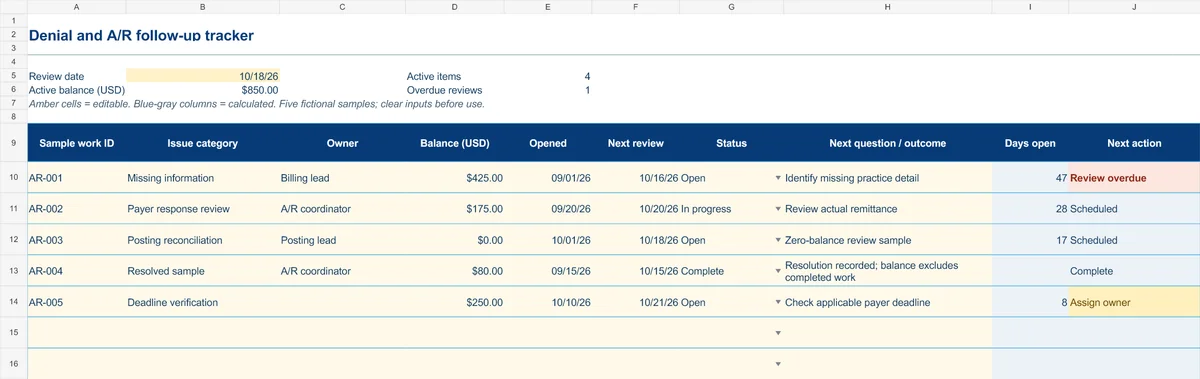
Start with the Instructions tab. Replace the five fictional samples, set your review date and keep the formula columns intact.
Free XLSX tool · No signup
Denial & A/R follow-up tracker
Plan anonymous follow-up work and make overdue reviews and missing owners visible.
- Fictional USD balances and active-balance summary
- Review dates chosen by your practice
- Calculated active items, age and next actions
Use anonymous process tasks. Keep PHI in approved systems. Includes instructions and fictional samples; no macros or live data connection.