

Keep the full remittance available
Use the approved source record rather than a screenshot of one code or a short internal reason label. Identify the affected claim or service line and the relevant payment context.
A summary may omit a detail that changes the next question. Preserve the response reference so another reviewer can return to the same evidence and understand how the current billing record was updated.
Distinguish the level of the question
CMS describes claim, service-line and provider-level adjustment information in its Medicare remittance guidance. That distinction helps the reviewer avoid assigning an unrelated reconciliation item to one patient balance.
The practice should use the full applicable response and its approved posting process. Do not infer patient responsibility or make a transfer merely because an isolated code looks familiar from an earlier account.

Move from the question to the next action
Reconcile interpretation and posting
Confirm how the response was applied in the billing system and whether the amount and status match the supporting record. Separate a posting discrepancy from a disagreement with the payer’s determination.
They may require different owners and evidence. If the issue is a source-record mismatch, correct it through the authorized process; if it requires payer or qualified review, keep that task visible rather than hiding it in an unexplained adjustment.
Record the decision and remaining work
A useful note explains what was reviewed, what the response indicates and which question remains. Include the relevant reference in the approved system and assign a next review date. Avoid notes that only state “ERA checked” or “balance adjusted.” Another person should be able to understand whether the item is resolved, awaiting an answer or pending an authorized decision without repeating the entire investigation.
Review repeat interpretation problems
When the same misunderstanding recurs, use an approved training example to clarify the workflow and relevant source. Keep training distinct from a universal rule about financial responsibility.
The denial and A/R template can assign anonymous reconciliation tasks, but its fictional balances are not patient liabilities or expected payments. Detailed remittance records and individual account decisions belong in the authorized billing system and applicable payer process.
Illustrative workflow
A practical example.
Fictional workflow: an analyst sees a difference between a deposited amount and a group of posted payments. Instead of moving the difference to one account, the posting lead reviews the full remittance and reconciliation context. The lead identifies the appropriate level of the question, documents the authorized posting outcome and keeps a separate payer inquiry open for the unresolved item.
Put it into practice
- Read the full response and relevant adjustment level.
- Separate posting reconciliation from a determination dispute.
- Document the authorized outcome and remaining question.
Inside the workbook
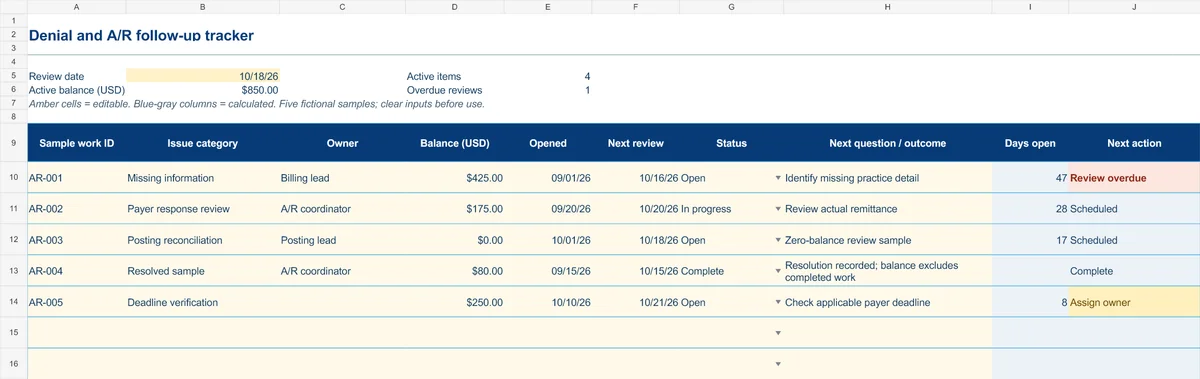
Start with the Instructions tab. Replace the five fictional samples, set your review date and keep the formula columns intact.
Free XLSX tool · No signup
Denial & A/R follow-up tracker
Plan anonymous follow-up work and make overdue reviews and missing owners visible.
- Fictional USD balances and active-balance summary
- Review dates chosen by your practice
- Calculated active items, age and next actions
Use anonymous process tasks. Keep PHI in approved systems. Includes instructions and fictional samples; no macros or live data connection.