

Freeze the report definitions
Record which reports, dates, filters and locations form the review. Identify whether a figure measures activity, an ending balance or cash received during a period.
These measures should not be added together or compared as though they represent the same thing. Preserve the source run settings so a later reviewer can reproduce the result and understand any change to the reporting method.
Explain the changes before judging them
Where the source data supports it, distinguish payments, adjustments, transfers and new activity affecting the period. An open-balance reduction is not automatically cash collection.
Reconcile payment-posting questions with the relevant remittance and deposit process, and identify items still awaiting review. The goal is a clear explanation of the numbers, not a preferred narrative about performance before the underlying records have been checked.

Move from the question to the next action
Bring the unresolved decisions into view
Summarize work waiting on practice input, payer response or authorized review. Give each item a specific next question, owner and review date.
Separate a pending clinical or coding determination from a missing administrative detail so the meeting can involve the right people. A status list with no decision request can occupy meeting time without changing what anyone is able to do afterward.
Choose a manageable improvement topic
Use the evidence to select a recurring workflow issue that the practice can realistically address. Define the proposed change and who will approve and communicate it.
Avoid adding several unrelated process changes simply because they appeared in the same month’s report. A focused improvement with a later sample is easier to assess than a broad instruction that no one can connect to an observable result.
Keep the closeout record concise
End with the agreed reporting explanation, unresolved dependencies and assigned actions. The internal medicine workbook can hold anonymous operational tasks and the next review date.
Keep report extracts and claim detail in approved systems and avoid copying them into a public template. At the next meeting, review the prior actions first, then use the same report definitions so completed process work and numerical changes can be discussed with appropriate context.
Illustrative workflow
A practical example.
Fictional workflow: the month-end aging total falls while staff report a large posting backlog. The review separates posted payments from other balance changes and identifies the accounts awaiting reconciliation. The practice assigns the posting question and one recurring missing-information handoff separately. The meeting record states what is known and what still needs confirmation, rather than describing the lower total as proof of improved collections.
Put it into practice
- Distinguish period activity from ending balances.
- Explain changes using source reports and reconciliation.
- Leave with named decisions and review dates.
Inside the workbook
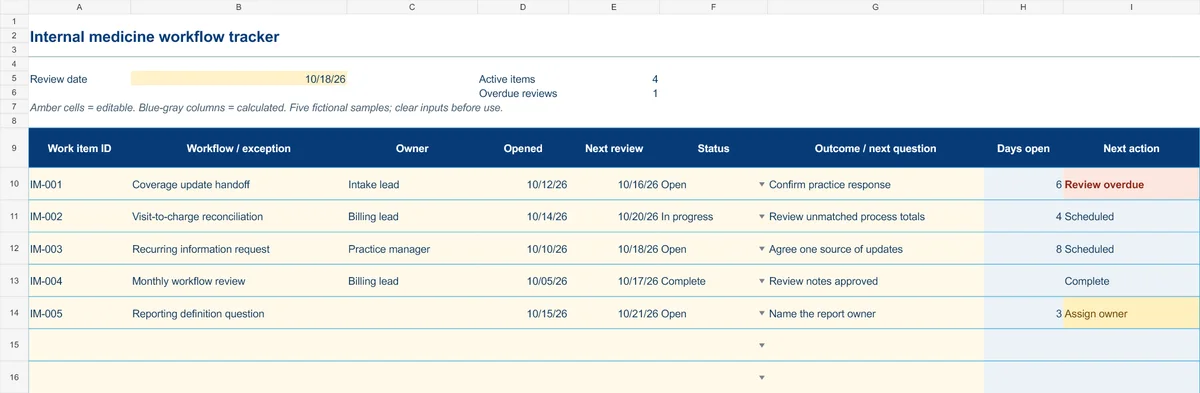
Start with the Instructions tab. Replace the five fictional samples, set your review date and keep the formula columns intact.
Free XLSX tool · No signup
Internal medicine workflow tracker
Coordinate recurring administrative exceptions, responsibilities and follow-up.
- 50 prepared operational work-item rows
- Opened date, next review and outcome notes
- Calculated days open and next actions
Use anonymous process tasks. Keep PHI in approved systems. Includes instructions and fictional samples; no macros or live data connection.