

Identify the event that requires a recheck
Define when your practice reviews coverage information and which source records the check. A new card, a payer response or a reported plan change should create a traceable administrative task.
Do not rely on a staff member remembering a conversation from reception. The process should record what needs confirmation and route it through the approved system, without turning a general checklist into a duplicate beneficiary file.
Keep plan identity more specific than a brand
A payer name alone may not identify the product, network or claims route involved. Make sure the authorized billing record contains the information needed to distinguish the actual plan.
If a change affects an earlier service date, identify that question explicitly rather than overwriting history as though the new information applied to every visit. The team should be able to explain which period it checked and what remains uncertain.

Move from the question to the next action
Separate verification from a promise
An administrative eligibility response is useful evidence, but the practice still needs to consider the actual service, program and payer conditions before billing. Avoid telling staff or patients that a single check guarantees payment.
When a response is unclear, keep the source reference and route the question to the designated practice or payer contact. National coverage material and state program resources have different scopes and should not be used interchangeably.
Make the update visible at the next handoff
Agree who changes the authorized record, who confirms receipt and who reviews claims already in progress. A corrected detail should not disappear in an inbox while another team continues from the older record. Use a clear task outcome such as “updated source record and notified billing contact” rather than “insurance fixed.” If the clinical workflow is unaffected, keep the administrative task separate from clinical notes and decisions.
Review recurring update failures
Group repeat exceptions by how the information was lost: unclear intake questions, a source-record mismatch or an absent response owner. Choose a specific improvement and test it on later handoffs.
For Florida Medicaid questions, AHCA’s provider resources are a starting point for the program route; the applicable plan and current policy still matter. The primary care tracker can help assign the process work while patient-level verification stays in approved systems.
Illustrative workflow
A practical example.
Fictional workflow: a returning patient reports a plan change, but billing receives only a shorthand payer name. The intake lead confirms the required product details through the practice process, updates the authorized record and notifies the billing contact. A separate review determines whether any work already underway needs attention for the relevant service date. The process does not assume the new information applies retroactively.
Put it into practice
- Identify the product and period being checked.
- Preserve the source and unresolved questions.
- Confirm the update reached the next responsible team.
Inside the workbook
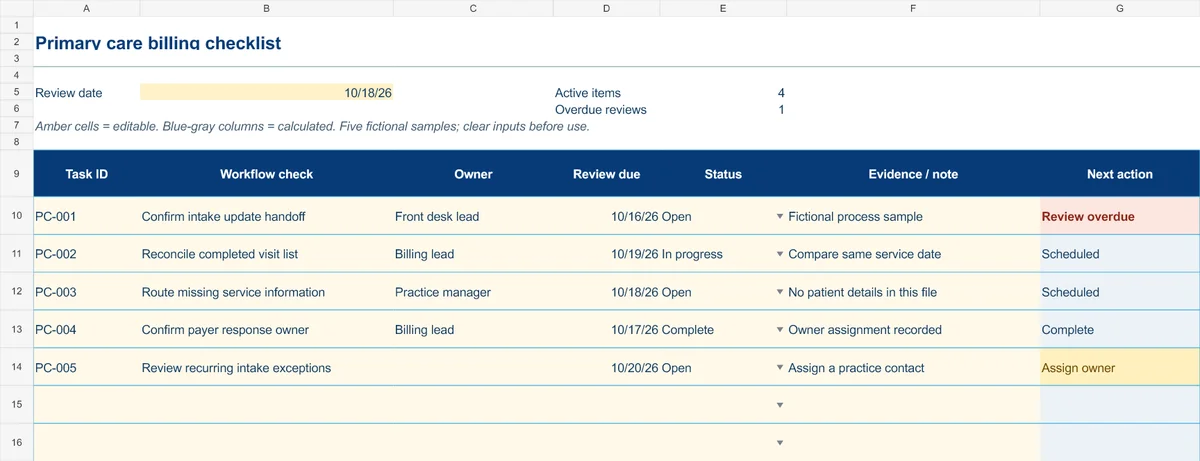
Start with the Instructions tab. Replace the five fictional samples, set your review date and keep the formula columns intact.
Free XLSX tool · No signup
Primary care billing checklist
Daily process checks across intake, encounter reconciliation and payer follow-up.
- 50 prepared task rows and five fictional examples
- Owner, review date, status and evidence notes
- Calculated next-action reminders
Use anonymous process tasks. Keep PHI in approved systems. Includes instructions and fictional samples; no macros or live data connection.